
The Union Cabinet on Thursday approved a proposal to allow 100 per cent foreign direct investment (FDI) in public sector refiners, expanding the scope for FDI in the privatisation of Bharat Petroleum Corporation Ltd (BPCL). The approval by the Cabinet will enable the sale of the government's 52.98 per cent stake in BPCL to a foreign buyer, and, at the same time, will open the door for FDI in other public sector companies in the oil sector put up for privatisation.

Recovery from the second wave of the pandemic in April-May is expected to be swifter as compared to the first wave in 2020, according to the Confederation of Indian Industries (CII) chief executive officers (CEOs) poll of 119 top corporate. During the second wave, the lockdowns were largely designed to limit social gatherings and impact on economic activities was restricted. This helped arrest the impact of the second wave on economic growth, according to a survey conducted by the industry lobby group Confederation of Indian Industries (CII). About 59 per cent of the CEOs polled expect the recovery in sales to be better than in the first wave for their companies, while 46 per cent of them expressed a similar trend for their respective industry sectors.

Infosys chairman and Aadhaar architect Nandan Nilekani will join a panel set up by the central government, along with eight other members, to advise the government on designing and accelerating adoption of Open Network for Digital Commerce (ONDC), aimed at curbing digital monopolies. The larger idea is to give 'free and fair' choice to consumers to buy products on an online platform, a senior government official said.

The Centre has slapped as many as 148 notices on e-commerce players in the past three months for not complying with the mandatory display of the 'country of origin' tag on products sold. "Of the 148 notices, 56 have compounded it (the offence) and paid up around Rs 34 lakh," a senior official told Business Standard. "Every product has to display the country of origin, along with other basic information," the official added. In the case of e-commerce companies, these details have to be clearly displayed on their portals.

The trade to-and-from India so far is not affected. But if the situation continues to remain the same for the next two to three months, it could definitely hurt India trade, including essential cargo.

'Supplies should start moving to the Serum Institute without any impediments.'

Recently, the finance ministry waived off basic customs duty and health cess on imported oxygen and related equipment for three years.
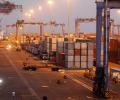
According to Ajai Sahai, director-general and CEO of Federation of Indian Export Organisations, rising cases are a cause for concern as it adds to the uncertainty and may impact exports.
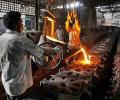
The central government is devising a mechanism to step up screening imports to protect domestic manufacturers. The details of the online monitoring system may find mention in the foreign trade policy 2021-26, which will kick in next month. The online system will make the data available to the government as well as industry about the countries from where the goods are being imported, and their quantity and quality. The data can help domestic producers analyse the market potential for such goods, said a senior government official. In the past 16 months, the government had implemented a steel- and coal-import monitoring system.

Many industry executives have said the draft e-commerce policy is being perceived as nationalistic but not overly protectionist and it is providing preference to Indian players against foreign companies. This might have an impact on investment by large players such as Walmart and Amazon in the country, said the executives. They said e-commerce was a very small portion of the retail industry and at a nascent stage and did not require heavy hammer regulations. Though the policy talks about being equally applicable to foreign and domestic players, it mentions that foreign direct investment (FDI) takes precedence over the e-commerce policy in any area of overlap.

The world economy has slipped into a state of stagflation, says Reddy.
In an earlier analysis for the period till April 26, it had been found that of the 365 items in the WPI, the index for as many as 166 items had not been revised for more than four months. The latest analysis as of June 21 shows that the index for around 55 of these 166 items has been revised. In effect, only one-third of the items have seen an index revision. During this period, headline inflation has moved from 8.27 per cent to 11.63 per cent.
The move aimed at blunting Finance Ministry, RBI's opposition to monthly reporting.
The average number of workers a business unit employs is declining for both urban and rural areas.
The Foreign Investment Promotion Board, the nodal body for approving foreign direct investment in the country, has given its nod to a proposal from Germany-based Deutsche Bank to buy a 5 per cent stake in the Delhi Stock Exchange.
The panel has also decided to increase the weight of manufactured items and the fuel group in the new index. Accordingly, the new WPI series, with a revised base year of 2004-05, will see the weight of manufactured items go up to around 65 per cent from 63.75 per cent in the present series.
A high-level committee on External Commercial Borrowings chaired by Finance Secretary D Subbarao is expected to take a final view on the matter this week. The committee comprises officials of the ministry of finance and the Reserve Bank of India. A high-level committee on External Commercial Borrowings chaired by Finance Secretary D Subbarao is expected to take a final view on the matter this week.
This lack of regular and detailed disclosure by companies or respondents lies at the core of the problem, one that has gained ground in recent weeks.
A nation-wide housing price index may be a reality soon. The National Housing Bank, in collaboration with the National Council of Applied Economic Research, is close to finalising the methodology to be adopted for the index, named NHB Residex.
The International Monetary Fund has reduced India's contribution to world gross domestic product in purchasing power parity terms to 4.6 per cent in 2007 from the earlier estimate of 6.4 per cent.
 © 2026 Rediff.com - Investor Information - Advertise with us - Disclaimer - Privacy Policy - Sitemap - Feedback - About us - Terms of use - Grievances